Scratchd app icon

Scratchd

Write it down before you decide where it goes.

Scratchd is a notes app for Mac, iPhone, iPad and Apple Watch. Everything it keeps is a file in a folder you choose. There is no account, and nothing is tracked.

$4.99 each, bought once. No subscription. Both together are $7.99.

Out now for iPhone, iPad, Apple Watch and CarPlay. One purchase covers them all.

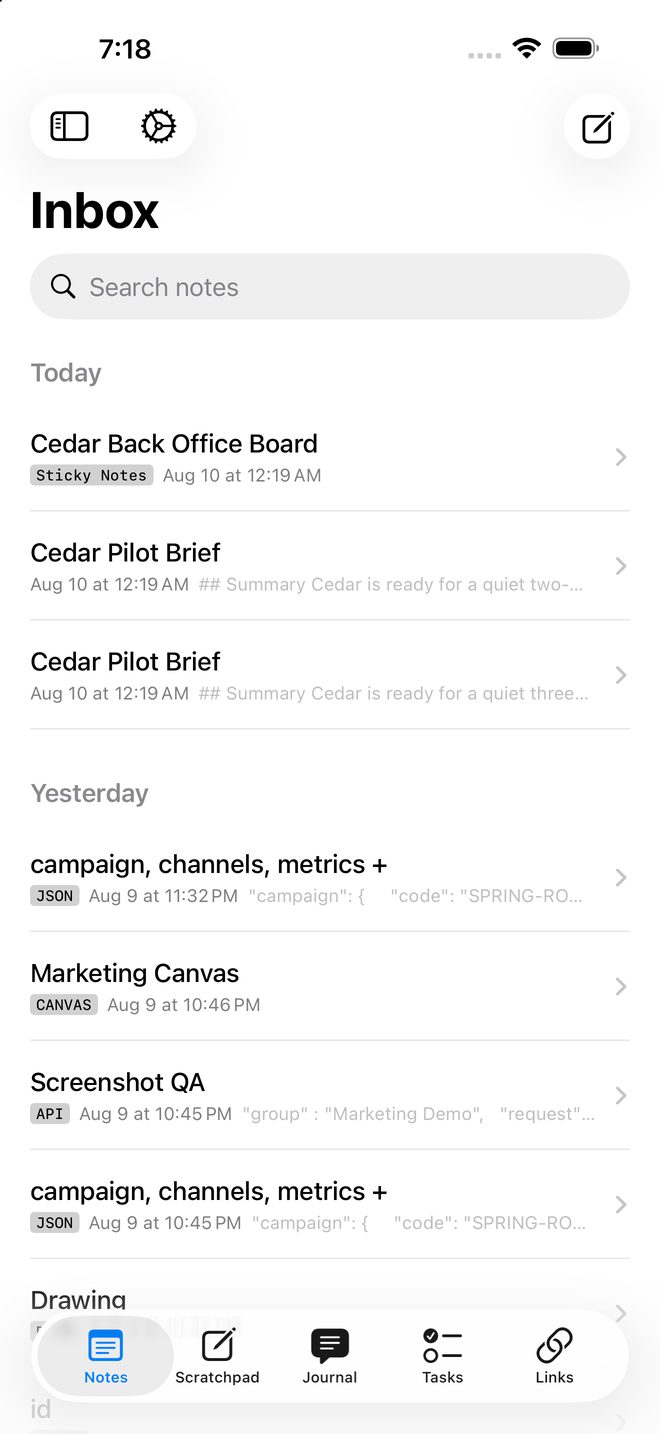
Inbox with mixed note types
One inbox. Filing is optional.
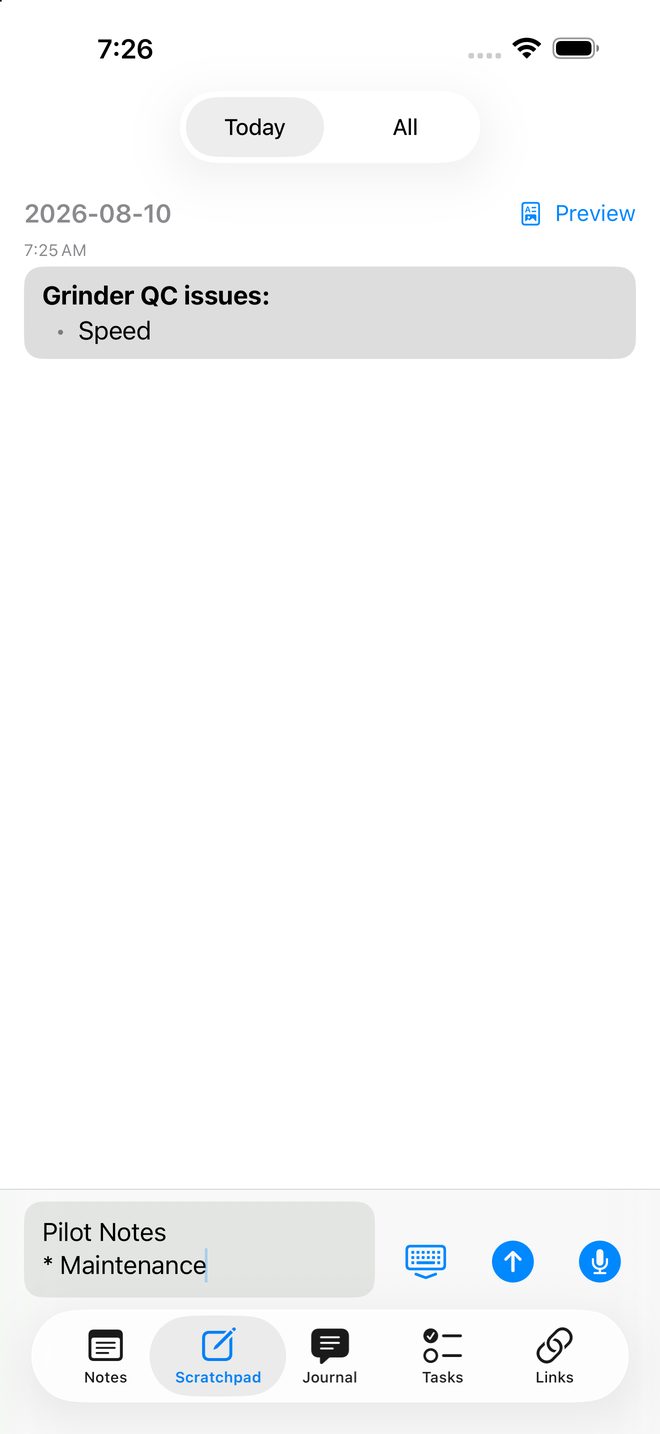
Scratchpad with the jot field open
Type first. Decide later.
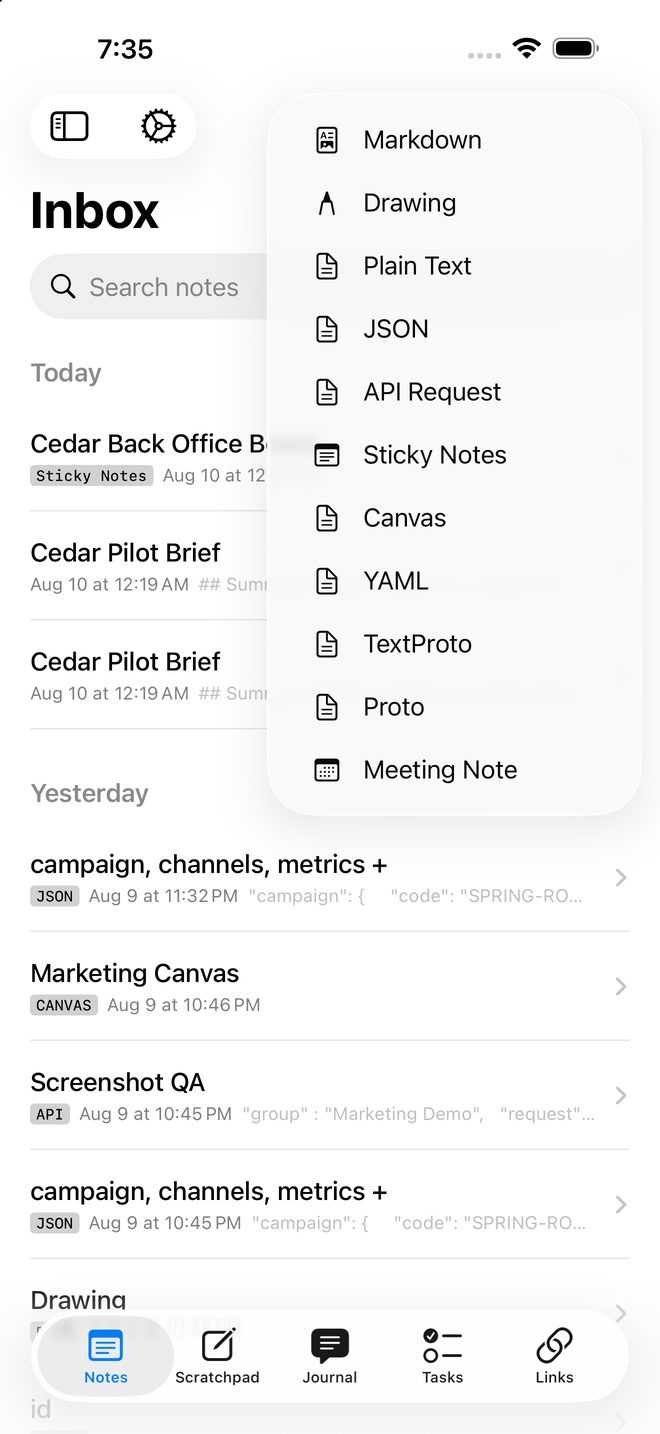
The new‑note menu listing every note type
Text unless you say otherwise.
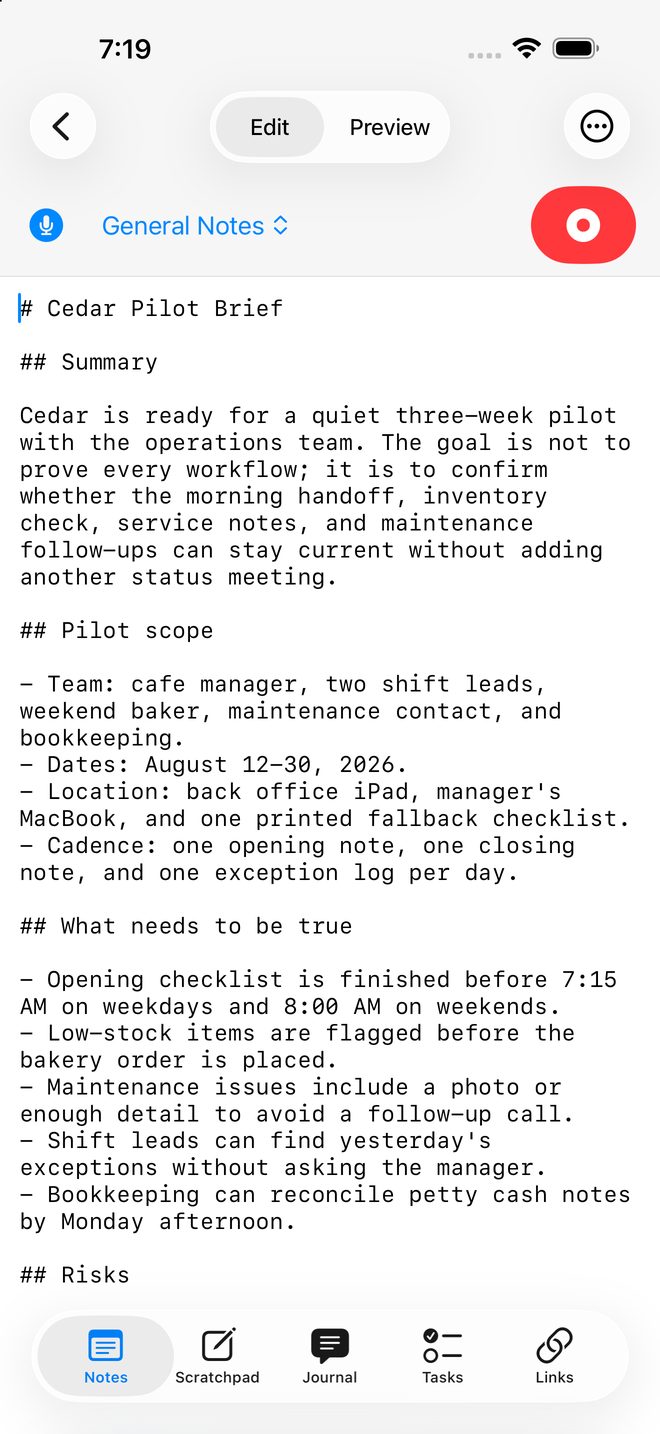
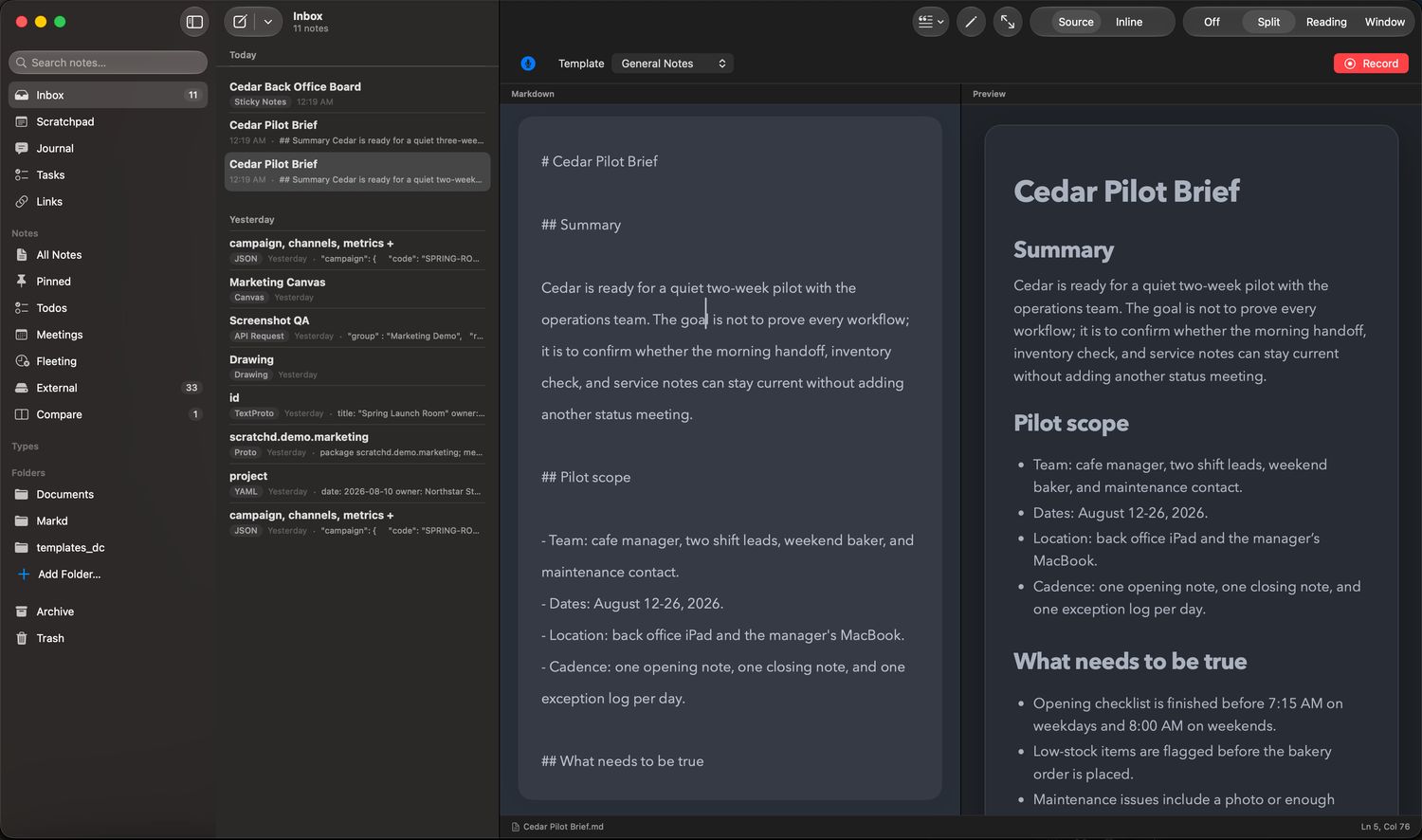
Markdown note being edited
Write. It’s already saved.
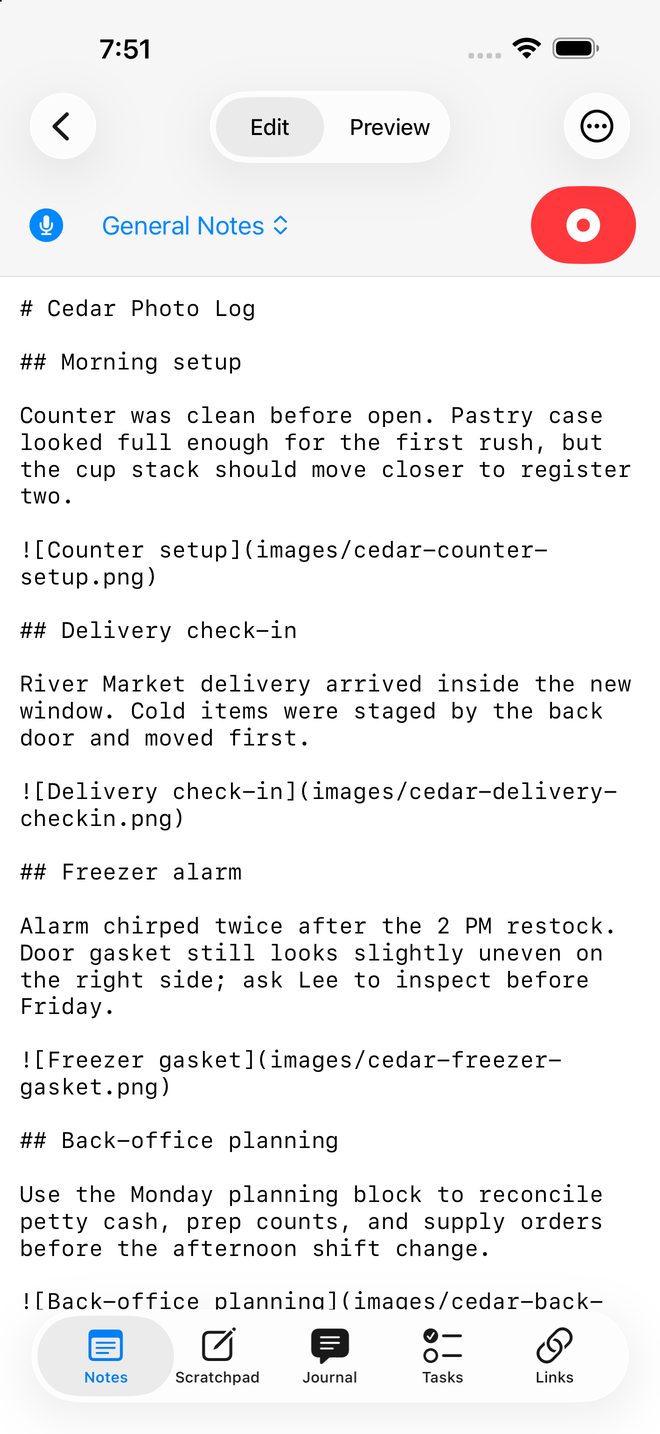
Markdown source showing photos linked from an images folder
A photo is a link to a file.
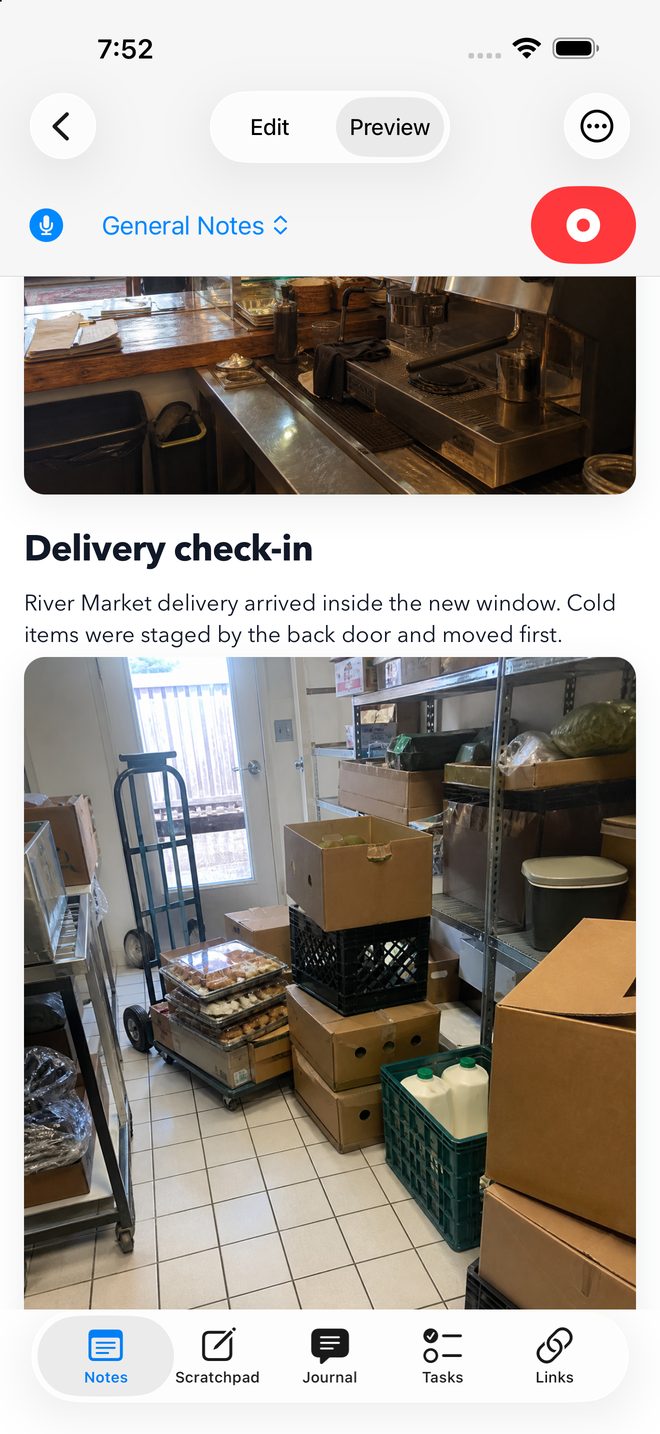
The same note in preview, with the photos drawn inline
Preview draws it in place.
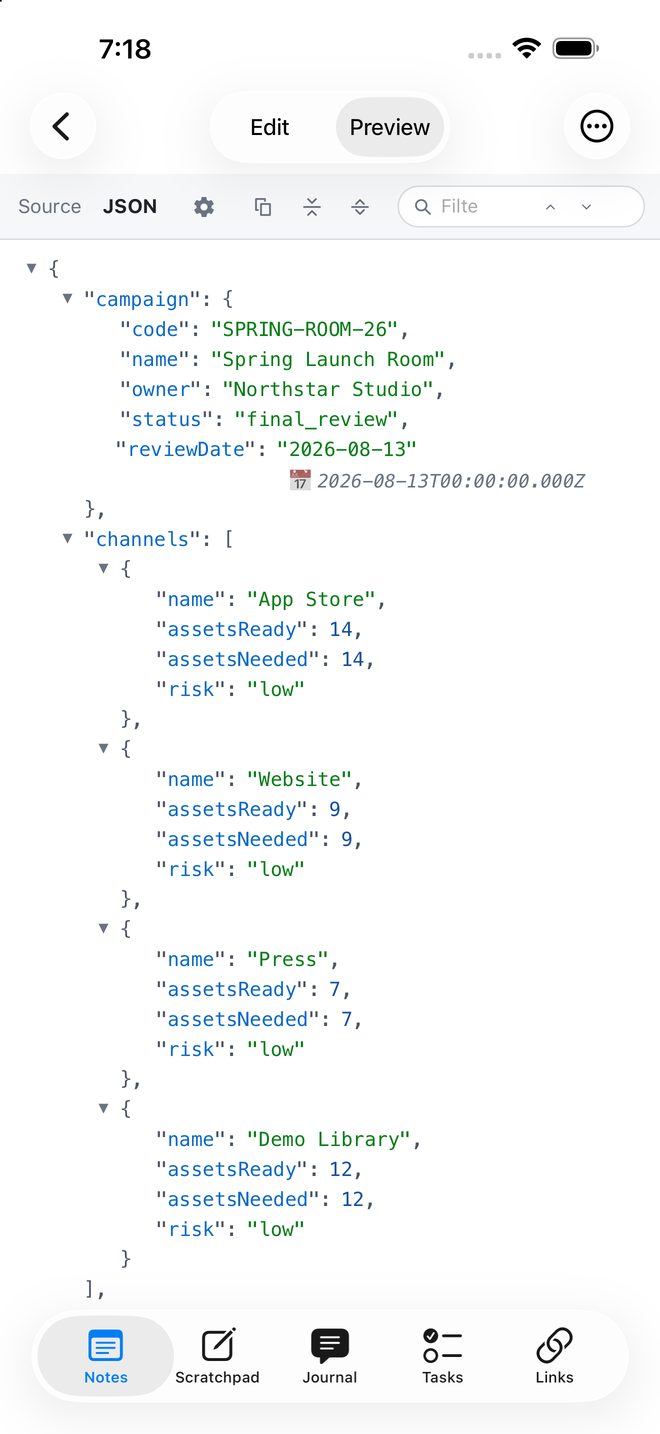
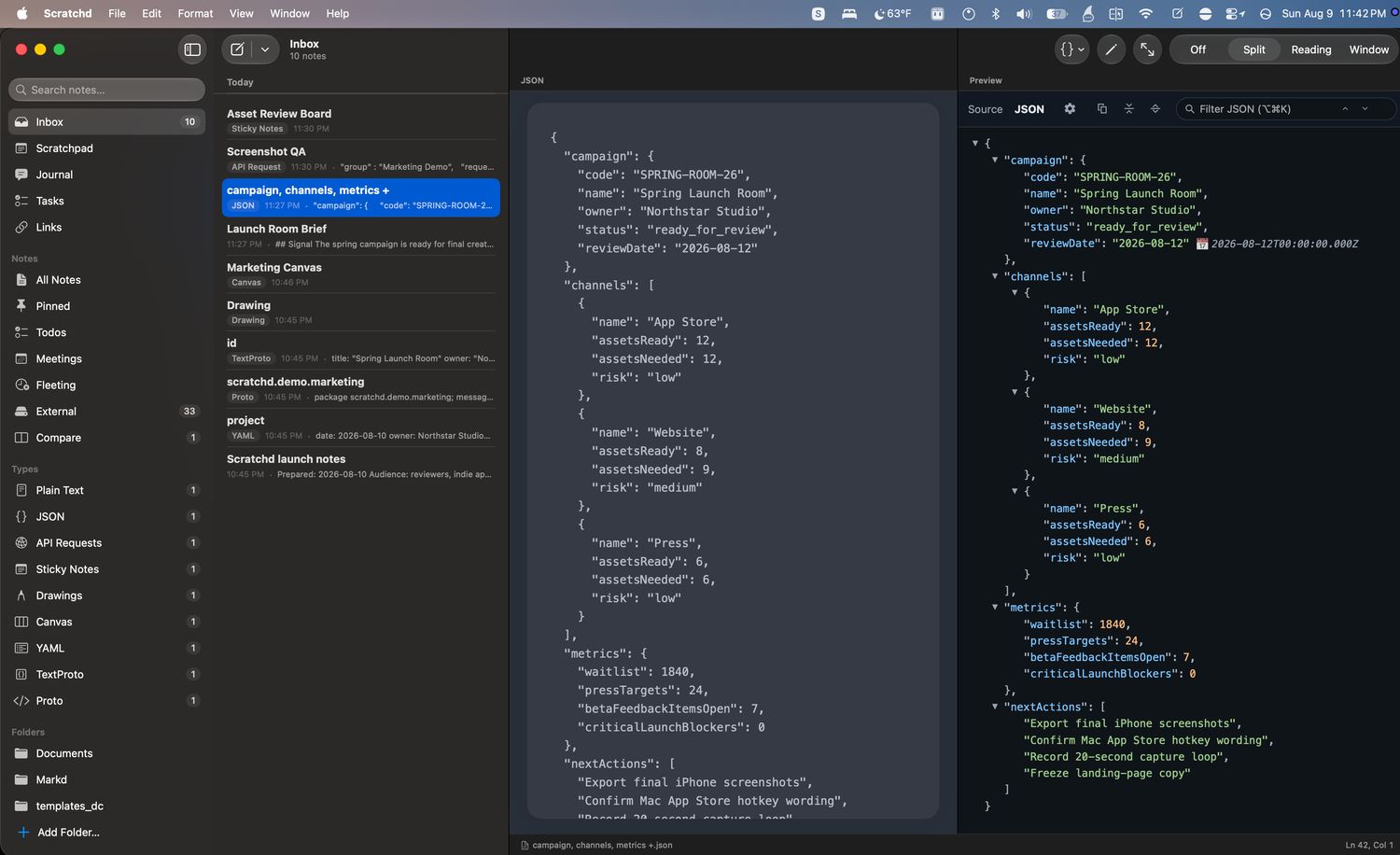
JSON rendered as a browsable tree
JSON that reads like JSON.
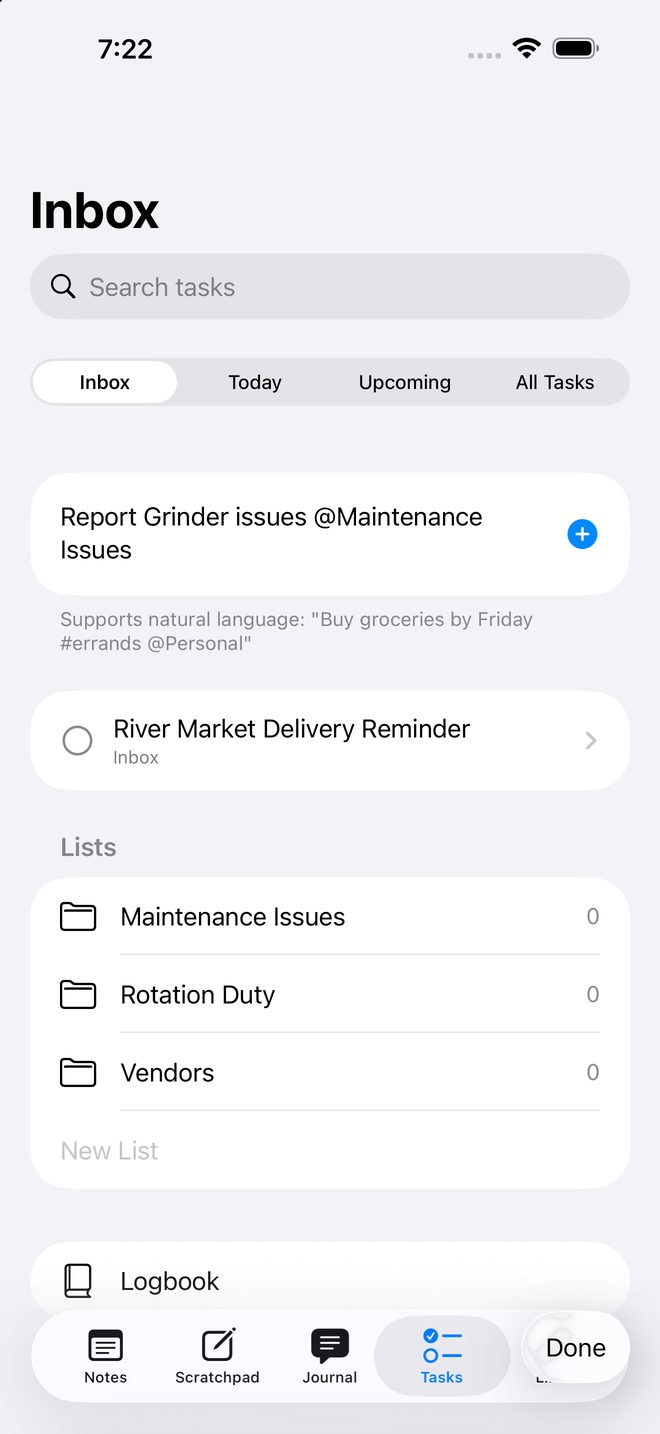
Tasks, natural‑language entry
Plain English becomes a task.
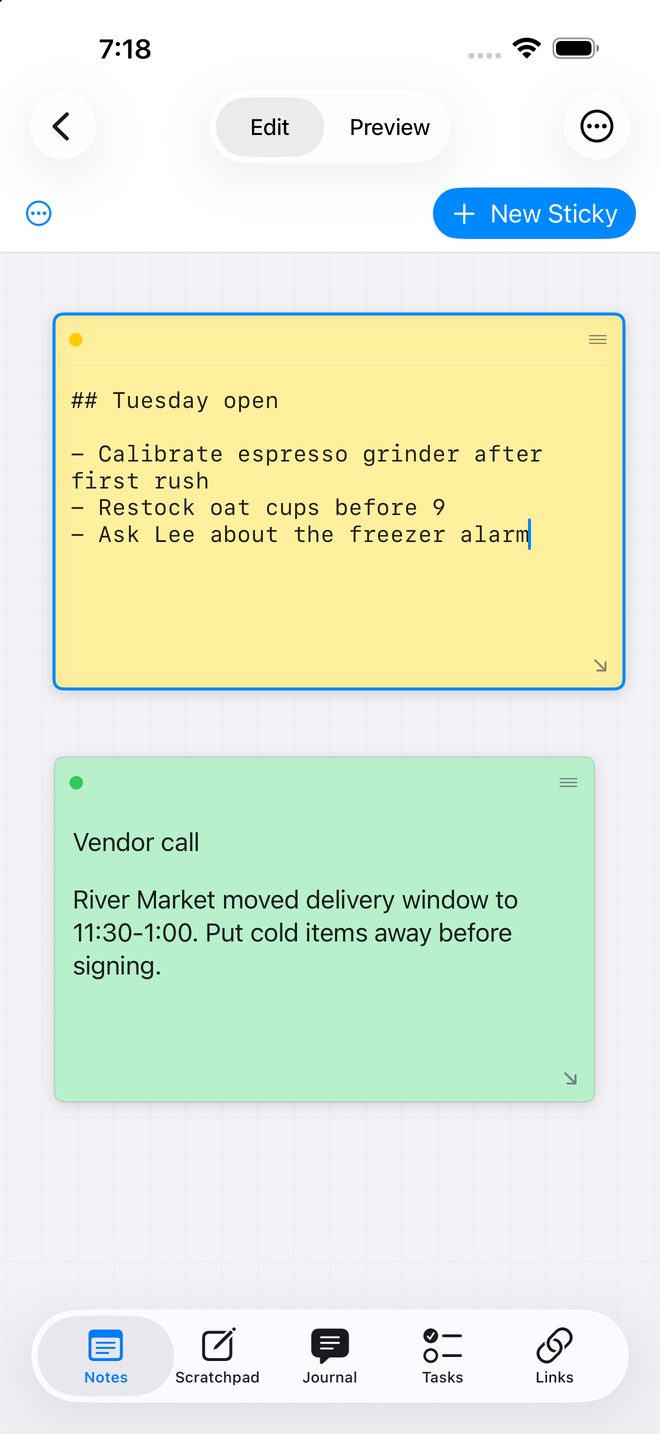
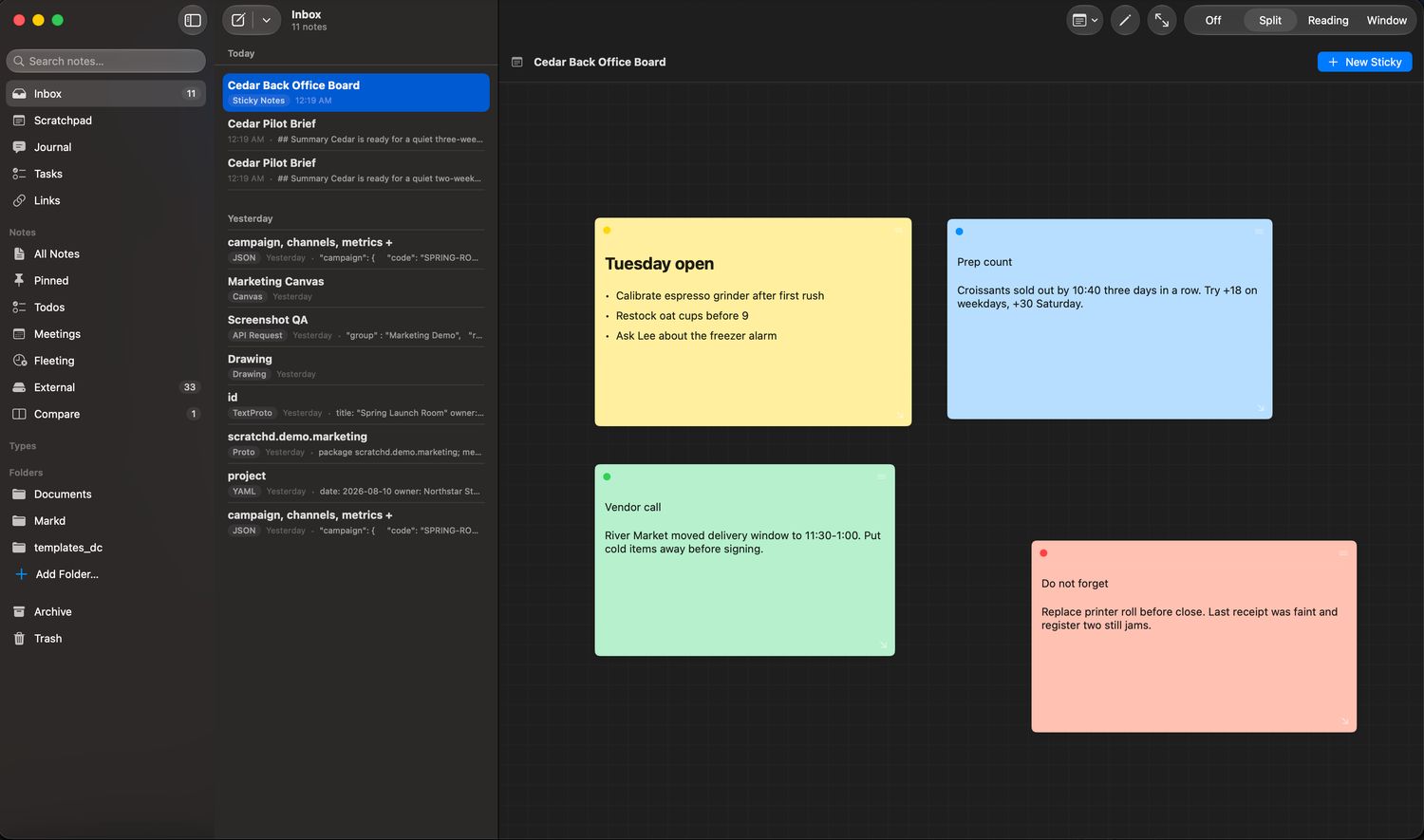
Sticky note board
Room for the messy stage.
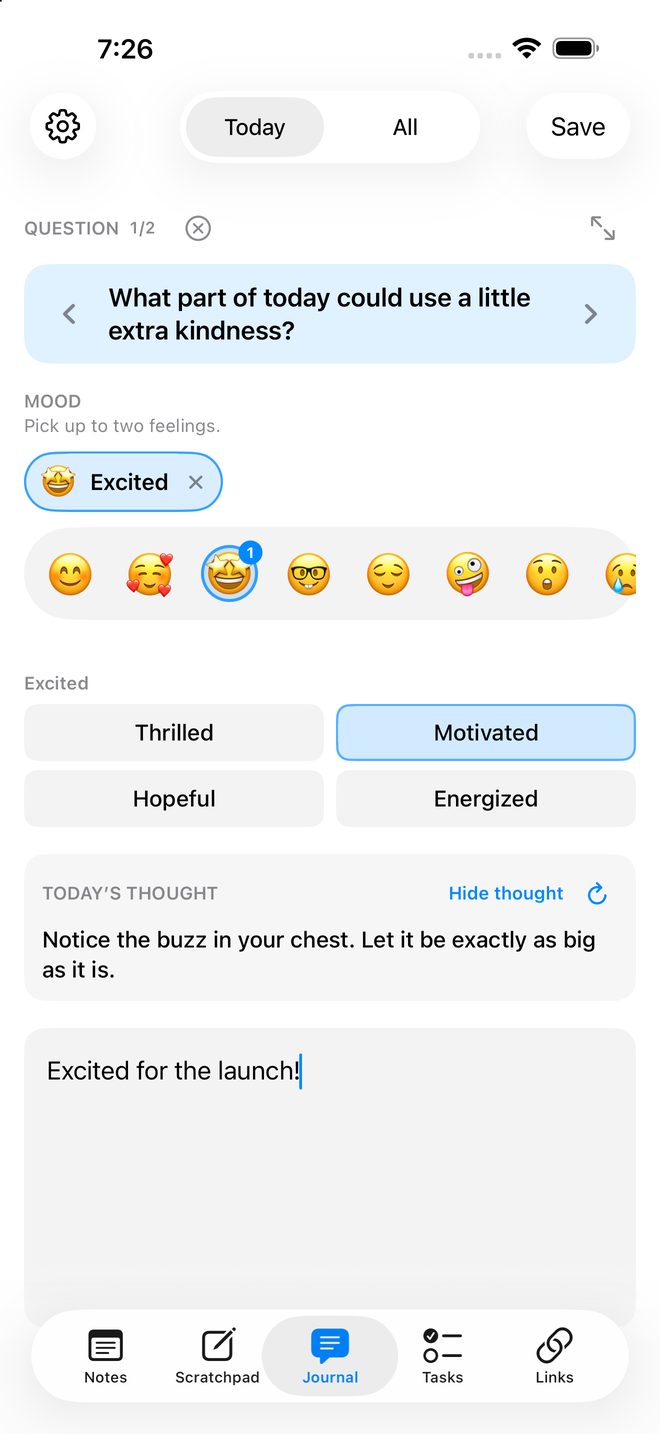
Journal prompt with the mood picker
A journal that doesn’t nag.

Capture

One inbox. Filing is optional.

Everything new goes to the same inbox. You can archive it, pin it, tag it or turn it into a task whenever you feel like it. You do not have to set up folders before you start writing, and Scratchd never prompts you to organise anything.

Today’s scratchpad is already created and already dated. It is meant for the notes that are not worth naming a file for.

Ownership

Your notes are files in a folder you chose.

Scratchd stores notes as files in a folder you pick. Most people leave it in iCloud Drive so it follows them between devices, but any folder works, including one that never leaves the machine. They are not rows in a database that only Scratchd can read.

Nearly all of them are plain text you can read anywhere: .md, .txt, .json, .yaml, .proto and textproto, with sticky boards and canvases stored as JSON. A drawing is the exception. Its file points at the artwork, which is written beside it as an SVG so it opens in anything.

You can search them with grep, open them in another editor, or keep the folder in a git repo. Edit a note somewhere else and Scratchd picks up your change rather than overwriting it.

Photos work the same way. They sit in a folder beside the note and are linked from it, so the note still reads as Markdown anywhere else and a photo is still just a photo.

If you stop using Scratchd, the folder stays where it is and everything in it still opens in other apps.
~/iCloud Drive/Scratchd
$ grep -rl "postgres" .
./inbox/2026-08-04-migration.md
./notes/db-failover-runbook.md
./api/staging-healthcheck.api

$ ls tasks/
groceries.task   ship-1.0.task   reading.task

$ git add . && git commit -m "notes"
[main 4f2c1ab] notes
 12 files changed, 208 insertions(+)

The Stack

For the thought that needs somewhere to go before it goes anywhere.

A pad of paper, on ⌥S on the Mac and its own tab on iPhone and iPad. Type a line and swipe to the next card. Nothing is filed, nothing is named, and nothing asks you where it belongs. When a card turns out to be worth keeping, promote it into a real note.

  • Cards expire on a clock you set, so the pad does not become another backlog
  • Type list on the first line and every line gets a checkbox, maintained for you
  • Type sum and the numbers total themselves as you write
  • Ticked items can move to the bottom when you leave the note, if you want them to
  • Paste a screenshot and the words come out of it, on device
  • Hash, encode, sort, tidy up and convert, with one word on the first line

Stack commands

One word on the first line.

Put a word at the top of a card and it does something to the text underneath. Hashes, encodings and conversions write their answer below and keep it up to date while you type. The rest change your text, and wait until you ask: ⌥⏎ on the Mac, or the button above the keyboard on iPhone and iPad. Type / to search them.

list, count, sum, avg and math can be renamed in Settings › Stack if they get in the way of something you write often.

Built in

list
Every line becomes a checkbox, maintained as you type.
count
Says how many items the note holds.
sum
Adds up every number in the note.
avg
Averages every number in the note.
math
Lines ending in = are worked out.
paste
Collects whatever you copy into the note, until you stop it.

Hash

md5
Writes the MD5 of everything below.
sha1
Writes the SHA-1 of everything below.
sha256
Writes the SHA-256 of everything below.
sha512
Writes the SHA-512 of everything below.

Encode & Decode

base64
Encodes the lines below as Base64.
unbase64
Decodes Base64 back to text.
urlencode
Escapes the lines below for use inside a URL.
urldecode
Turns percent escapes, and + for space, back into characters.
htmlencode
Escapes &, < and > so HTML shows them.
htmldecode
Turns HTML entities back into characters.
rot13
Rotates each letter thirteen places, which undoes itself.

Change Case

upper
UPPERCASES the lines below.
lower
lowercases the lines below.
camel
Runs the words together, capitalising each but the first.
snake
Joins words with underscores.
kebab
Joins words with hyphens.
title
Capitalises The First Letter Of Each Word.
deburr
Turns accented letters into their plain equivalents.

Lines

sort
Sorts the lines alphabetically.
natsort
Sorts lines so item10 comes after item9, not after item1.
reverse
Turns the lines upside down.
dedupe
Keeps the first of each repeated line.
shuffle
Puts the lines in a random order.
trim
Takes the spaces off both ends of every line.

Clean Up

noblanks
Drops every blank line.
squeeze
Collapses runs of spaces, keeping each line's indent.
unquote
Strips the > that email and Markdown put in front of a quote.
untab
Turns every tab into four spaces.
entab
Turns each four spaces of indent into a tab.
join
Runs each paragraph onto one line, keeping the blank lines between them.
doublespace
Puts a blank line between every line.
ellipsis
Turns ... into a single character.
unellipsis
Turns an ellipsis back into three dots.
straighten
Turns curly quotes and apostrophes into straight ones.
number
Numbers the lines that have something on them.
unnumber
Takes a leading number and its dot back off.

Convert

date
Reads each epoch below as a date, in seconds or milliseconds.
epoch
Reads each date below as an epoch, in milliseconds.
color
Writes each colour below as hex, RGB and HSL.

Generate

uuid
Writes a new UUID. Option-Return again for another.
now
Writes this moment as an epoch, in milliseconds.

Everywhere

Capture from wherever you are.

Whatever you are in the middle of, there is a way in that does not start with finding the app. Voice notes are transcribed on your device; if a device cannot do that locally, Scratchd says so rather than uploading your audio.

  • Share sheet on Mac and iPhone
  • Home Screen widget
  • Siri and Shortcuts
  • Apple Watch, for notes, voice notes and journal entries
  • CarPlay, where picking a note starts a recording into it
  • ⌃⌥ Space on the Mac, over whatever you are using
  • Shake the mouse on the Mac, which needs no permission at all
  • Today’s scratchpad, one step away on every platform

Formats

Not everything you note down is prose.

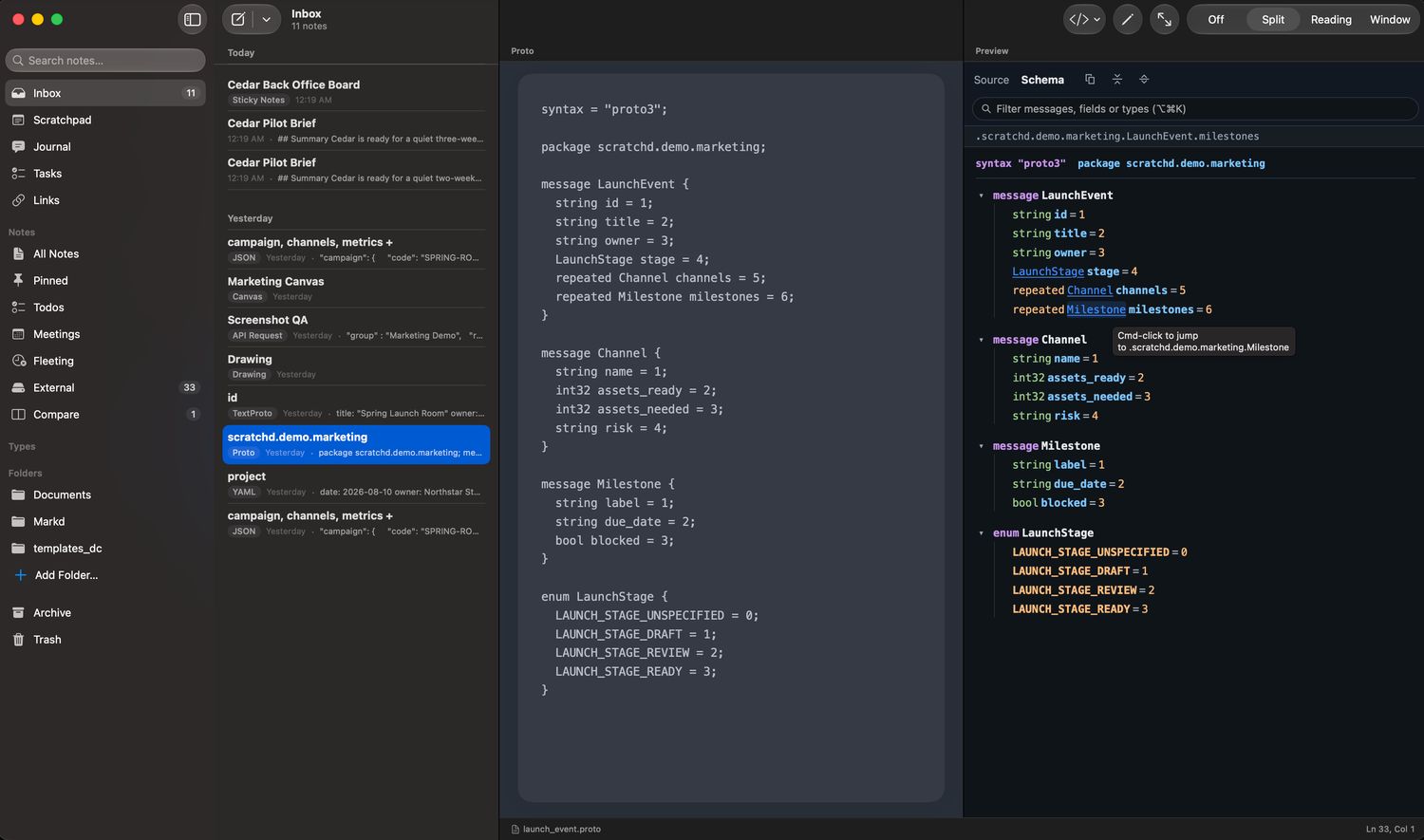
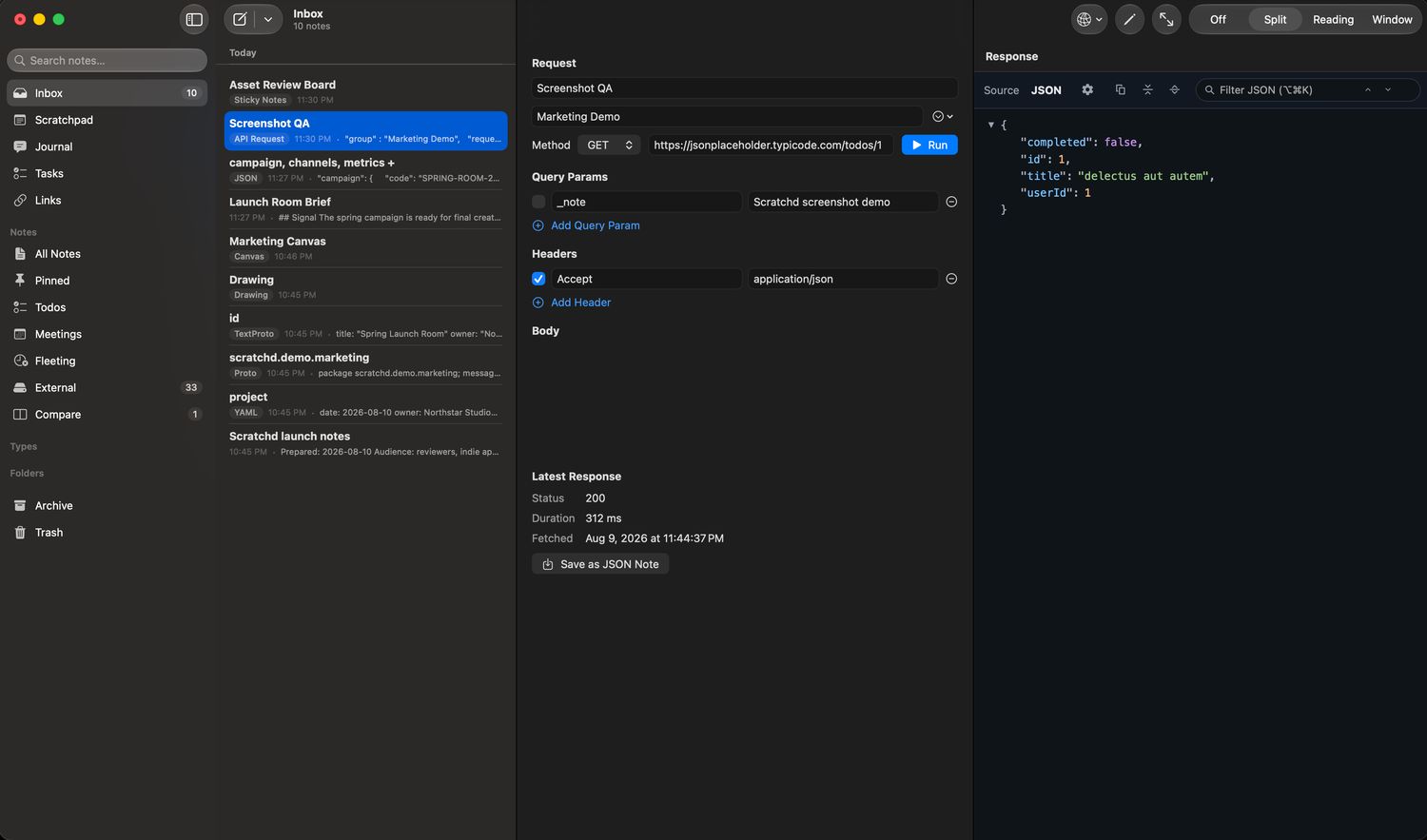
Paste a JSON payload and Scratchd renders it as a browsable tree. Open a .proto schema and you can jump from a field type to its definition. YAML, textproto, Mermaid diagrams and runnable API requests live in the same library as your written notes.

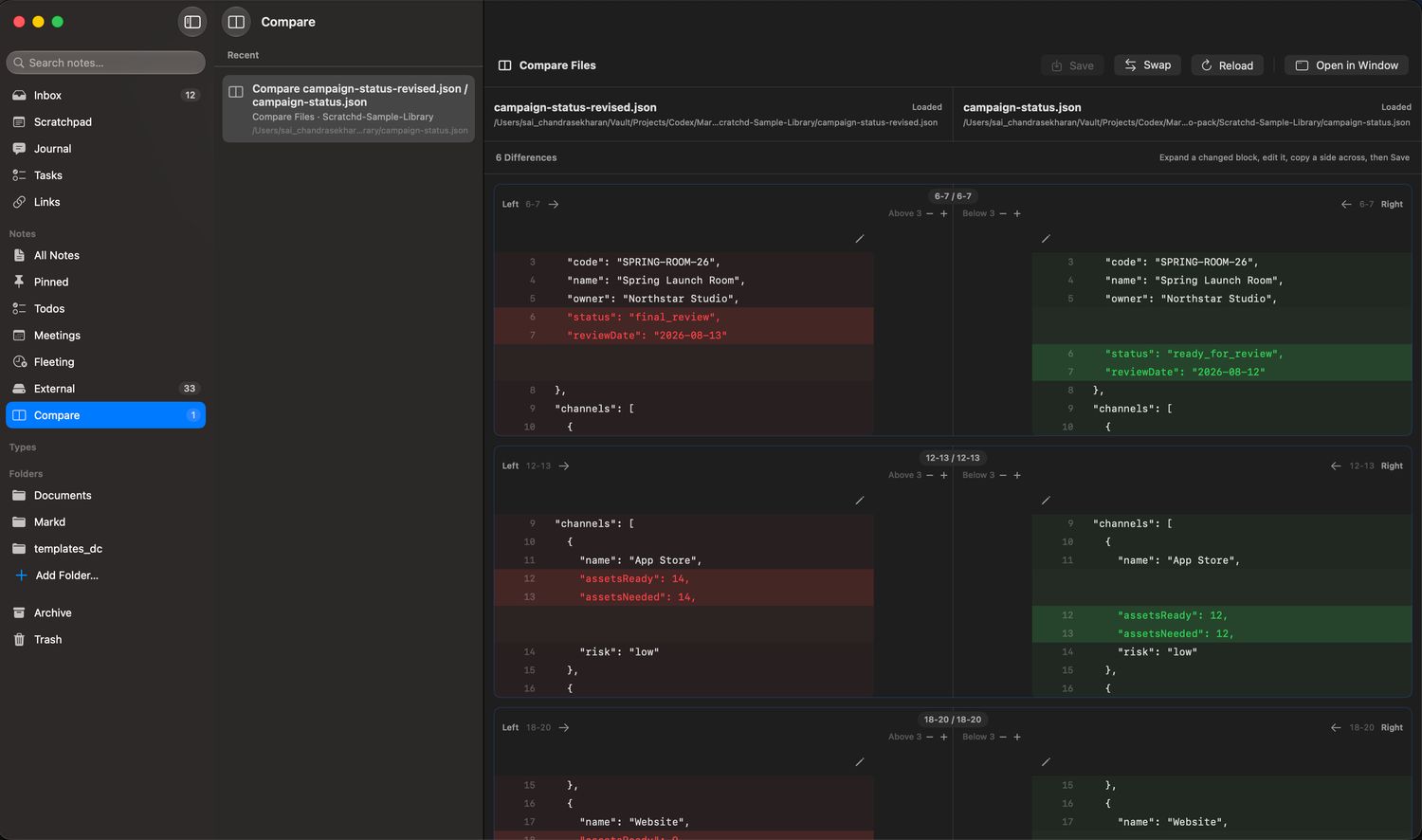
There are also sticky boards for arranging ideas next to each other, a canvas, and freehand drawing with Apple Pencil. On the Mac you can put two of any of these side by side and apply the differences one at a time, and the notes you have open sit in tabs above the editor rather than sending you back to the list each time.

  • .md
  • .txt
  • .json
  • .yaml
  • .proto
  • .textproto
  • .api
  • .stickies
  • .canvas
  • .drawing
  • .jrnl
Markdown editor beside the live preview
Write. It’s already saved.
JSON source beside the rendered tree
JSON that reads like JSON.
Proto schema viewer with go‑to‑definition
Jump through your schemas.
API request beside its response
Run the request. Keep the response.
Two JSON files compared side by side
Diff without leaving.
Sticky note board
Room for the messy stage.

Tasks, links, journal

The other things you keep are files too.

Tasks live in tasks/, saved links in links/ and journal days in journal/, in the same library as your notes. Nothing is in a separate database, so the folder you back up holds all of it.

Tasks take plain English. Type “buy groceries by Friday #errands @Personal” and Scratchd works out the date and the list. There are checklists and sub‑lists, a Today view, an Evening flag, recurring tasks and a logbook of what you finished.

The journal has optional morning and evening prompts, a mood you tap in a second, focus areas you chose yourself, and photos. You can back‑date an entry to any day in the last month. Reminders are local, at times you set, and there are no streaks to keep up.

Watch & CarPlay

On your wrist, and in your car.

The Apple Watch app takes a note however your watch lets you enter text: Scribble, dictation, or the keyboard if your model has one. It shows a typed note back before sending it, so you can fix what Scribble misheard while you still remember what you meant. Voice notes and journal entries go from the wrist too. If your phone is out of range, anything you capture waits and retries.

Scratchd also appears in CarPlay. The note list reads at a glance with New at the top, and picking a note starts recording an addition to it rather than putting text on the screen. Anything you record is in your library by the time you park.

Read‑aloud is there if you want it, switched off to begin with. Turn it on and picking a note plays it back before you record. It uses the system voice. Needs iOS 26.4. Why.

Fleeting notes

Notes you can give an expiry date.

You can give a note an expiry date. When it arrives, Scratchd asks whether to keep it. Nothing is deleted without you.

Privacy

What leaves your device, and what does not.

Scratchd has no account and no sign‑up. It contains no analytics, no tracking and no third‑party SDKs.

Your notes are in your own folder. Innovatory does not run a server that stores them. Voice notes are processed on your device. The app makes network requests only for things you set up yourself, such as running an API request you wrote.

Scratchd does make outbound requests. All of them are either started by you or switched off until you turn them on. The privacy policy lists each one.

Version 10

This is version 10. It is the first one for sale.

Scratchd began as a plain Markdown editor. Version 2 added the scratchpad. Later versions added tasks, links, the journal, and the structured viewers for JSON, YAML and Protocol Buffers.

The first nine were used every day and never sold. The feature list reflects what got used over those years rather than what was planned.

  • 1  Markdown editor
  • 2  Scratchpad
  • … Tasks
  • … Links
  • … Journal
  • … Structured viewers
  • 10  For sale

Questions

Where are my notes stored?

In a folder you choose, as ordinary files. The default is a folder in your iCloud Drive, but you can point Scratchd anywhere, including a folder that stays on one machine. Open it in Finder or the Files app and the notes are just there.

Do I need an account?

No. There is nothing to sign up for, and no Scratchd account exists to make. Syncing, if you want it, is your own iCloud Drive doing the work, so it follows from where you put the folder. Choose a folder outside iCloud Drive and nothing syncs; the notes stay on that device.

What happens if I stop using Scratchd?

You keep the folder. Plain text, Markdown and structured files such as JSON, YAML, .proto and textproto still open in other apps.

Does it work with Obsidian, iA Writer, or my editor?

Yes. Point another app at the same folder. Scratchd notices changes made outside it and picks them up.

Is my voice recording uploaded?

No. Voice notes require on‑device speech recognition and Apple’s on‑device models, and if those are not available Scratchd declines rather than falling back to a server.

Is there AI in this?

Two features use Apple’s on‑device models: voice notes and the journal’s generated reflection. Both run on your device, on hardware and OS versions that support them, and neither is sent anywhere for processing. There is no chatbot.

Can I use it for code and config?

Yes, and that is much of why it exists. JSON, YAML, .proto and textproto get real previews, and .proto gets a schema viewer with go‑to‑definition.

What does it cost?

There are two apps. The Mac app is $4.99. The iPhone app is $4.99 and covers iPad and Apple Watch as well, so there is nothing further to buy for those. Scratchd Bundle covers both for $7.99. You buy it once. There is no subscription and no in‑app purchase.

Why does it say version 10 if it is new?

Because it is the tenth version. It is the first one that has been for sale. It started as a plain Markdown editor and gained a scratchpad, tasks, links, a journal and the structured viewers over the versions since.

What do I need to run it?

macOS 26, iOS 18, watchOS 11. Two features need more: CarPlay requires iOS 26.4, and voice notes plus the journal’s generated reflection require a device that supports Apple Intelligence.

  • macOS 26 or later
  • iOS / iPadOS 18 or later
  • watchOS 11 or later
  • CarPlay iOS 26.4 or later